
A robot vacuum only solves pet hair if the brush stops hair from wrapping it. That is the deciding feature, not the suction number: long hair and fine undercoat pull off a spinning bristle roller and wind around the axle, where suction can no longer reach it. A rubber roller, or a design with a comb that strips the roller as it turns, is what prevents that. Everything else on this page follows from that one mechanical fact.
Below are the eight models in our catalogue whose stated use cases cover pet hair, ranked by editorial score. After the shortlist, four sections cover the problems buyers actually hit — long dog hair, cat litter, dander, and running the robot at night — because a robot that handles two of those and fails the third is not worth $600 to a two-pet household.
Why pet hair behaves differently from ordinary dust
Pet hair arrives in two shapes, and they fail in opposite ways. Long guard hairs from double-coated dogs wrap around a brush roller into a matted sleeve; once that happens the roller stops gripping and the robot drives over the same hair instead of collecting it. Short, barbed undercoat does the opposite: it packs into the filter and the bin, and suction drops as the filter clogs.
That is why one model can be excellent in a Labrador home and useless in a home with a cat. The brush handles the long hair, the filter handles the fine hair, and the two are separate components with separate failure modes.
Hair also loads the motor differently from dust. The maintenance guide puts it directly: a robot that "suddenly sounds louder, misses spots, or drains its battery quickly is usually telling you something is dirty, not broken". Hair wrapped around a brush is the most common cause of that louder noise, and it is the reason we treat the brush as the first specification that matters rather than the last.
What actually matters for pet hair
Four features decide the outcome, in this order.
| Feature | Why it decides the purchase | What to check |
|---|---|---|
| Brush type | A bristle roller wraps and stops gripping; a rubber roller sheds hair off the surface | Whether the roller is rubber, bristle, or a hybrid — and whether it has a comb |
| Filter access | Fine undercoat clogs the filter and the robot quietly loses suction | Whether the filter is washable, and how it comes out |
| Self-emptying dock | A pet household fills a bin in a single run; a full bin stops lifting hair | The bin on the robot, not just the bag capacity |
| Obstacle detection | A robot that drags a sock across the floor spreads the problem | Whether it detects cables and loose items, not just walls |
Ranked by how often each one turns into a return. A robot with the wrong brush cannot be fixed by any other setting.
Do you need the mop, or just the vacuum?
For a pet household the mop is usually the weaker half and the part that causes the most regret. Wet floors plus shed hair produce a smeared mess, and a mop pad that has run over a litter tray is not something you want crossing the kitchen. It earns its place in homes with hard floors and pets that track in clay litter dust; it does not earn its place in homes with wall-to-wall carpet, where there is nothing to mop.
If you are choosing between a better vacuum and a vacuum-mop combo at the same price, the better vacuum wins in a pet home. The eight models below all include mopping, because that is how the catalogue is built — but the feature that gets them onto this list is the brush and the bin, not the mop.
Long dog hair, cat litter, and dander: three different problems
Most pet-hair guides treat "pets" as one condition. In practice these three needs point at different models.
| Household | What fails first | What to prioritise |
|---|---|---|
| Double-coated dog (Husky, Shepherd, Retriever, Lab) | Guard hairs wrap the brush into a matted sleeve; the robot then spreads hair rather than collecting it | A rubber roller or a design with a self-clearing comb; check the roller before the suction figure |
| Cat with a litter tray | Clay litter granules are tracked 2–3 metres from the tray and are heavy enough to sit in a rug | No-go zones so the robot never enters the tray area; a bin that seals, because litter dust is fine |
| Dander-sensitive household | Dander is airborne and settles on surfaces, so floor pickup is only half the job | A sealed bin and a washable filter; the dock's emptying cycle should not blow fine dust back out |
If you have all three, the brush matters most. If you have a cat and hard floors, no-go zones matter more than the brush. If somebody in the house reacts to dander, treat floor cleaning as one of several jobs and not as the whole answer — no robot on this page removes dander from the air.
Do robot vacuums pick up pet hair on carpet?
Partially, and the honest version is that carpet is where the limitation shows. On a low-pile rug the robot maintains the surface between deeper cleans. On high-pile or deep carpet, a roller works the hair into the pile while the airflow is not strong enough to lift it back out, so weekly robot runs do not replace an upright pass.
What decides it is roller grip plus airflow together: a rubber roller that keeps contact with the carpet and does not clog is the useful half. Our carpet picks go further into the pile height question, and the buying guide covers how floor type should drive the choice before budget does.
How to keep the robot working in a pet home
Pet hair turns routine maintenance into the thing that decides whether the robot stays useful. The intervals our maintenance guide gives are the ones to plan around — filters every 2 to 3 months, brushes every 3 to 6 months — and a shedding household will be at the short end of both ranges rather than the long end.
- Clear the roller weekly. Run a thumb along it; if hair comes off in a matted band, the robot was already underperforming.
- Rinse the filter monthly if it is washable, and let it dry fully before refitting — a damp filter pulls dust into the housing.
- Check the side brush. Long hair wraps the arms and stops them sweeping debris into the path.
- Empty before the bin is full. A packed bin is the quiet way a robot stops collecting hair while still running its schedule.
Common mistakes when buying for this use case
These are the errors that turn a good robot into a returned one.
- Buying on suction alone — Pa figures are the number the listing leads with, and they say nothing about whether a roller will shed hair or wrap it. The brush decides the outcome.
- Assuming all self-emptying docks handle pet hair — The dock empties the bin; it does not touch the brush or the filter. A dock removes the emptying chore and leaves the two jobs that actually clog.
- Leaving the litter tray in the robot's path — Without a no-go zone the robot will cross the tray, and the litter does not stay in it. This is a setting, not a specification — but it is the most common avoidable mistake in cat households.
- Expecting one model to fix dander — Floor pickup collects hair and the debris carrying dander. It does not remove what is already airborne, and no robot on this page claims to.
- Skipping the brush check because the robot is 'self-cleaning' — Self-cleaning brushes resist wrapping; they do not eliminate it. The manual check still applies, particularly with double-coated dogs.
Who this guide is for — and who it is not
A page that claims to suit everyone suits nobody. Here is the line, stated plainly.
| This guide fits you if | It does not if |
|---|---|
|
|
Frequently asked questions
Do robot vacuums actually pick up pet hair?
What is the difference between a rubber and a bristle brush for pet hair?
How often should I run it in a home with pets?
Can a robot vacuum avoid pet accidents?
Do I still need a manual vacuum if I have a robot?
Is the self-emptying dock worth it with pets?
The eight picks, in order
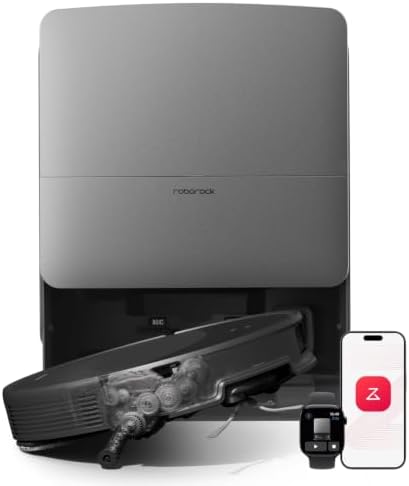
Roborock Saros 20
- 36,000Pa suction, a slim chassis, and hot-water mop washing for demanding homes.
- Best for mopping, self-emptying, large homes.
- Flagship pick at $1,599.99.
Why shortlist it: its catalog use-case tags point to mopping, hard floors, self-emptying, and its Flagship tier and 9.5/10 editorial score show where it fits in this lineup.
Read full review ›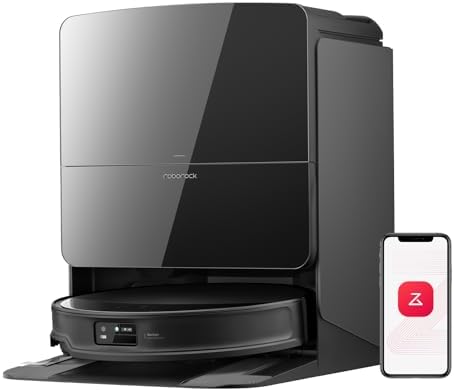
Roborock Saros 10R
- 22,000Pa suction with flagship obstacle avoidance and a wash-dry dock.
- Best for mopping, self-emptying.
- Flagship pick at $1,299.99.
Why shortlist it: its catalog use-case tags point to mopping, hard floors, self-emptying, and its Flagship tier and 9.4/10 editorial score show where it fits in this lineup.
Read full review ›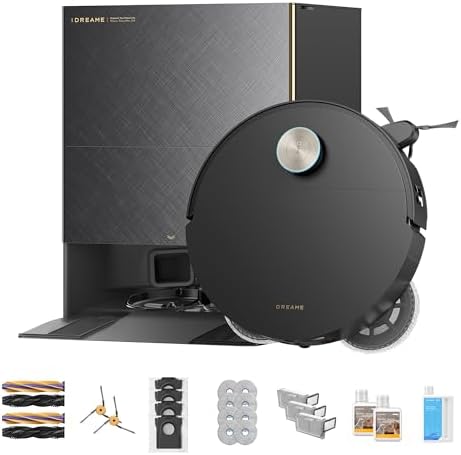
Dreame X60 Max Ultra Complete
- Dual AI cameras, 35,000Pa suction, and an ultra-thin design for low spaces.
- Best for mopping, self-emptying, large homes.
- Flagship pick at $1,614.99.
Why shortlist it: its catalog use-case tags point to mopping, hard floors, self-emptying, and its Flagship tier and 9.4/10 editorial score show where it fits in this lineup.
Read full review ›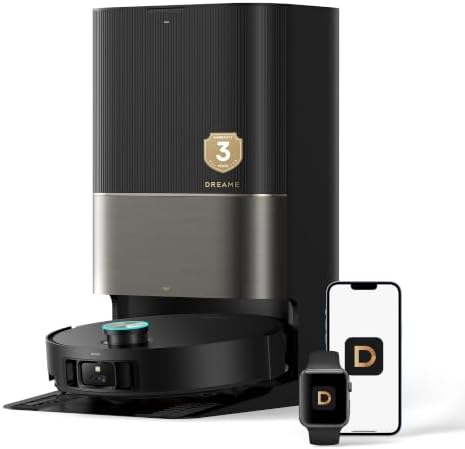
Dreame X50 Ultra
- Auto-empty, swing mop for edges, and top-tier navigation.
- Best for mopping, self-emptying.
- Flagship pick at $999.99.
Why shortlist it: its catalog use-case tags point to mopping, hard floors, self-emptying, and its Flagship tier and 9.3/10 editorial score show where it fits in this lineup.
Read full review ›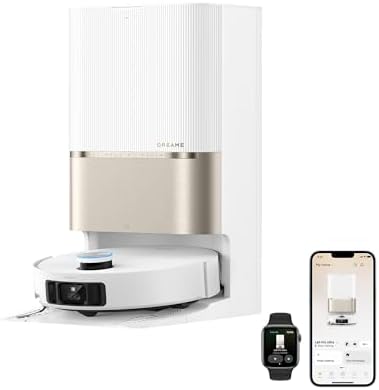
Dreame L60 Pro Ultra
- 35,000Pa suction, 8.8cm obstacle crossing, and a VersaLift dock.
- Best for mopping, self-emptying, large homes.
- Flagship pick at $1,400.17.
Why shortlist it: its catalog use-case tags point to mopping, hard floors, self-emptying, and its Flagship tier and 9.2/10 editorial score show where it fits in this lineup.
Read full review ›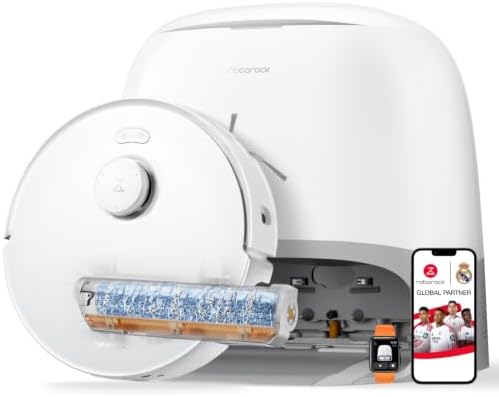
Roborock Qrevo Curv 2 Flow
- A roller-mop flagship with real-time self-cleaning, hot-water washing, and obstacle avoidance.
- Best for mopping, self-emptying, large homes.
- Flagship pick at $999.99.
Why shortlist it: its catalog use-case tags point to mopping, hard floors, self-emptying, and its Flagship tier and 9.1/10 editorial score show where it fits in this lineup.
Read full review ›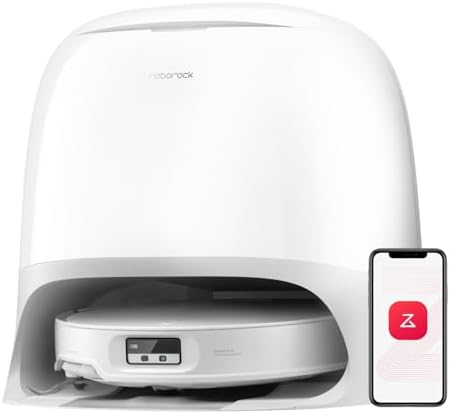
Roborock Qrevo CurvX
- 22,000Pa suction, an ultra-slim chassis, and a self-washing mop dock.
- Best for mopping, self-emptying.
- Premium pick at $799.99.
Why shortlist it: its catalog use-case tags point to mopping, hard floors, self-emptying, and its Premium tier and 9.0/10 editorial score show where it fits in this lineup.
Read full review ›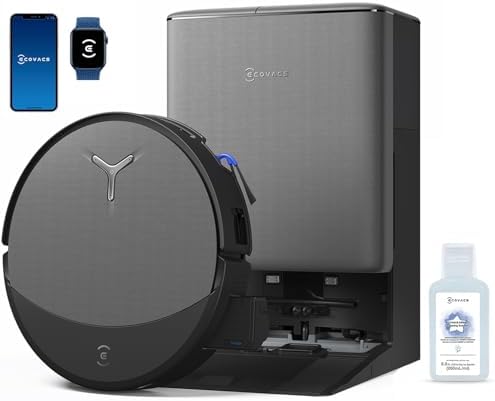
ECOVACS DEEBOT T90 PRO Omni
- 30,000Pa suction with a self-cleaning OZMO roller mop and a hands-free Omni station.
- Best for mopping, self-emptying.
- Flagship pick at $549.00.
Why shortlist it: its catalog use-case tags point to mopping, hard floors, self-emptying, and its Flagship tier and 9.0/10 editorial score show where it fits in this lineup.
Read full review ›Sources and what we did not measure
This page is built from the catalogue facts on each model page — price, editorial score, stated use cases — and from the manufacturer specifications linked below. We do not run a laboratory, so no number here is presented as our own measurement. Where a figure belongs to a manufacturer, it is attributed to them.