
The honest answer to "will a robot vacuum scratch my hardwood" is no — the robot is not what scratches it. A robot with a soft roller and padded wheels glides on the surface rather than dragging across it. What scuffs a floor is grit: sand, small stones and dry debris that get trapped between the wheel or roller and the finish, then pushed around for the length of a run. That is why keeping the bin and brush clear of grit matters more to your floor than which model you buy.
The models below are the highest-scoring robots in our catalogue for hard floors. Our catalogue marks 43 of 44 models as suitable for hardwood, so this is a ranking rather than a filter — it tells you what we rate most highly, not which machines are gentlest on a finish. The sections after the shortlist cover what actually protects a floor and what does not.
Will a robot vacuum scratch hardwood floors?
No, not through normal use on a sealed floor. Robots use soft rollers and padded wheels, and the chassis rides on those rather than on the floor itself. The parts that touch a hard floor are designed to slide.
The exception is grit. Sand and small dry debris caught under a wheel act like sandpaper under a weight, and that is the mechanism behind most floor damage attributed to robots. It is a maintenance problem, not a model problem — which is why our maintenance guide puts the brush and bin check on a weekly schedule.
What actually protects a hardwood floor?
| Feature | Why it matters on hardwood | What to check |
|---|---|---|
| Rubber or soft roller | Wider contact and no stiff bristles digging at the finish | Whether the roller is rubber, bristle or hybrid |
| Padded drive wheels | The whole weight sits here; bare plastic wheels are the rubbing point | Whether the wheels are rubberised |
| Moisture control | Standing water dulls and eventually warps a finish | Whether the mop uses a controlled flow rather than a wet pad |
| Lift on carpet | A roller that keeps spinning on a rug edge drags grit onto the floor | Whether the robot lifts or stops the roller on carpet |
Ranked by how often each one shows up in the "is this safe" question. None of them is about suction.
Is suction or mopping more important on hard floors?
Suction matters less on hardwood than it does on carpet. Hard flooring does not hold debris the way pile does, so a mid-range robot picks up nearly everything a flagship does. The differences that show up on a flat surface are edge reach and how thoroughly the robot covers the floor, not the pressure figure.
Mopping is the more consequential choice, and the more conditional one. On a sealed floor a controlled-damp mop keeps the surface clean. On an oiled, waxed, or unsealed floor, any routine moisture is a risk to the finish — in that case buy for vacuuming and keep water off it entirely. If you are unsure which you have, that question is worth resolving before you compare models, because it eliminates half the catalogue.
Hardwood, laminate, and vinyl: do they need different robots?
Mostly no, with one exception that matters. Sealed hardwood, laminate and luxury vinyl are all flat hard surfaces and behave the same under a robot: vacuum, light damp mopping, keep grit off them.
The exception is unsealed or oiled wood, where the finish is in the wood rather than on top of it. That surface is sensitive to standing water and to anything abrasive, so the safe configuration is vacuum-only. Dark floors add a second consideration that has nothing to do with damage — light scuff marks and dust show up far more, so frequency of running matters more than the machine.
Which floor types can take moisture, and which cannot?
The single decision that eliminates half the catalogue is whether your floor can take any water. This is the short version; if you are unsure which finish you have, assume the cautious column until you check.
| Floor type | Robot vacuum | Robot mop | Watch for |
|---|---|---|---|
| Sealed hardwood | Yes | Yes, controlled damp | Grit under the wheels |
| Oiled or waxed wood | Yes | No | Any standing moisture dulls the finish |
| Laminate | Yes | Light damp only | Seams swelling if water pools |
| Luxury vinyl plank | Yes | Yes | Little risk; grit still scuffs |
| Unsealed wood | Yes | No | Water raises the grain |
Based on how each finish is constructed, not on a test we ran. When in doubt, treat the floor as the cautious column and vacuum only.
Do you need the mop, or is vacuum enough?
On sealed hardwood, a mop earns its place if you walk barefoot or have pets, because the film that builds up is what a vacuum cannot lift. If you already mop by hand monthly, the robot mop mostly maintains between those runs.
What it does not do is replace a deep clean. A robot mop uses a small amount of water and light pressure; sticky residue and dried spills still need a hand pass. Our vacuum-only guide covers the other side of this choice, and the carpet shortlist covers homes where pile is the harder problem.
Why does grit matter more than the robot?
Because grit is the only thing in the system that behaves like an abrasive. A rubber roller on a clean floor does not mark it. The same roller, with a grain of sand caught under it, is a small sander moving under the weight of the machine for the whole run.
Two habits remove most of the risk, and neither costs anything. Run the robot on a schedule so debris does not accumulate between passes, and clear the brush and bin weekly rather than when performance drops — a full bin recirculates what it picked up. A doormat at the entrance does the rest, since tracked-in grit is where most of it comes from.
Who this guide is for — and who it is not
A page that claims to suit everyone suits nobody. Here is the line, stated plainly.
| This guide fits you if | It does not if |
|---|---|
|
|
Frequently asked questions
Will a robot vacuum scratch hardwood floors?
Are robot vacuums safe for dark hardwood floors?
Can I use a robot mop on hardwood?
Is a robot vacuum or a mop better for wood floors?
Do I need a special robot vacuum for hardwood?
How often should I run it on hardwood?
Will a robot vacuum damage laminate or vinyl plank?
The picks, in order
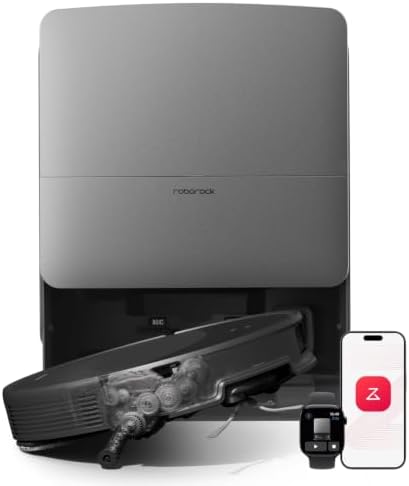
Roborock Saros 20
- 36,000Pa suction, a slim chassis, and hot-water mop washing for demanding homes.
- Best for mopping, self-emptying, large homes.
- Flagship pick at $1,599.99.
Why shortlist it: its catalog use-case tags point to mopping, hard floors, self-emptying, and its Flagship tier and 9.5/10 editorial score show where it fits in this lineup.
Read full review ›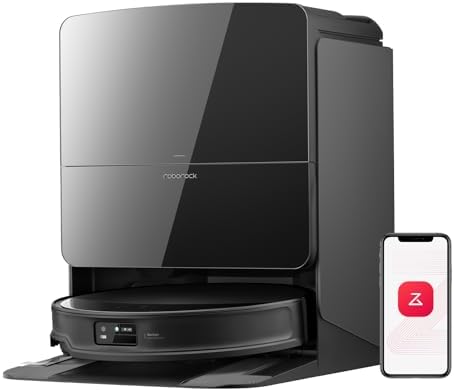
Roborock Saros 10R
- 22,000Pa suction with flagship obstacle avoidance and a wash-dry dock.
- Best for mopping, self-emptying.
- Flagship pick at $1,299.99.
Why shortlist it: its catalog use-case tags point to mopping, hard floors, self-emptying, and its Flagship tier and 9.4/10 editorial score show where it fits in this lineup.
Read full review ›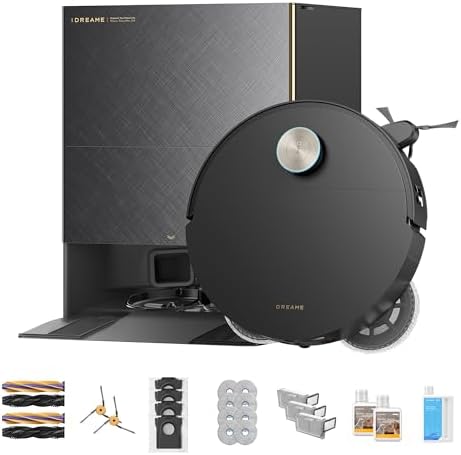
Dreame X60 Max Ultra Complete
- Dual AI cameras, 35,000Pa suction, and an ultra-thin design for low spaces.
- Best for mopping, self-emptying, large homes.
- Flagship pick at $1,614.99.
Why shortlist it: its catalog use-case tags point to mopping, hard floors, self-emptying, and its Flagship tier and 9.4/10 editorial score show where it fits in this lineup.
Read full review ›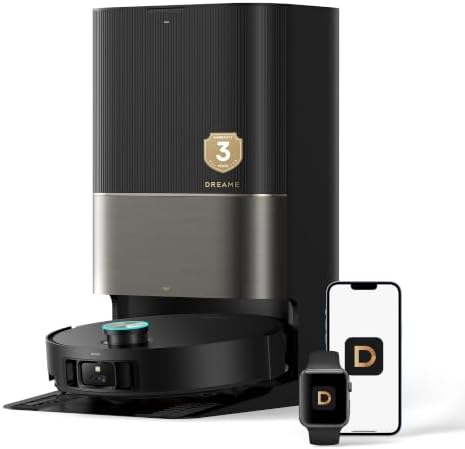
Dreame X50 Ultra
- Auto-empty, swing mop for edges, and top-tier navigation.
- Best for mopping, self-emptying.
- Flagship pick at $999.99.
Why shortlist it: its catalog use-case tags point to mopping, hard floors, self-emptying, and its Flagship tier and 9.3/10 editorial score show where it fits in this lineup.
Read full review ›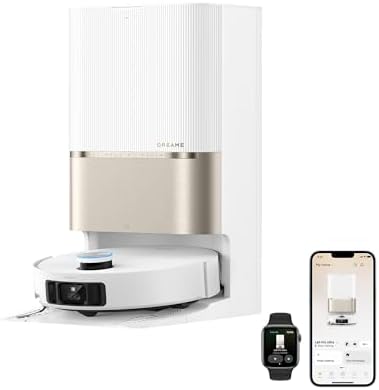
Dreame L60 Pro Ultra
- 35,000Pa suction, 8.8cm obstacle crossing, and a VersaLift dock.
- Best for mopping, self-emptying, large homes.
- Flagship pick at $1,400.17.
Why shortlist it: its catalog use-case tags point to mopping, hard floors, self-emptying, and its Flagship tier and 9.2/10 editorial score show where it fits in this lineup.
Read full review ›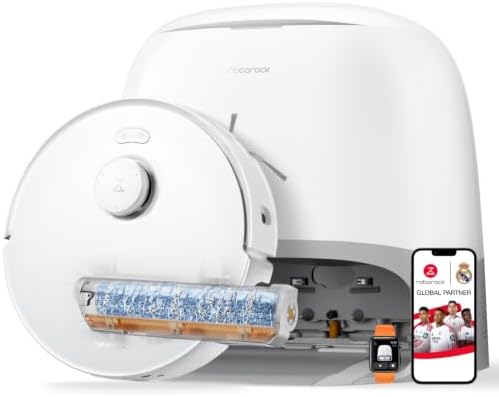
Roborock Qrevo Curv 2 Flow
- A roller-mop flagship with real-time self-cleaning, hot-water washing, and obstacle avoidance.
- Best for mopping, self-emptying, large homes.
- Flagship pick at $999.99.
Why shortlist it: its catalog use-case tags point to mopping, hard floors, self-emptying, and its Flagship tier and 9.1/10 editorial score show where it fits in this lineup.
Read full review ›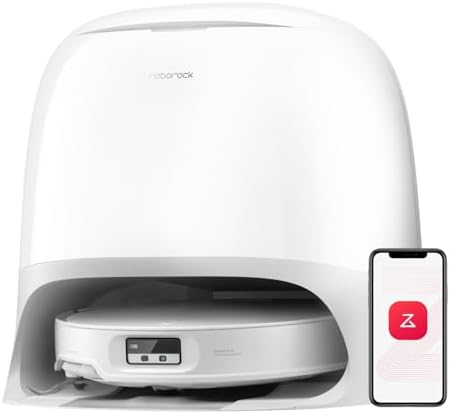
Roborock Qrevo CurvX
- 22,000Pa suction, an ultra-slim chassis, and a self-washing mop dock.
- Best for mopping, self-emptying.
- Premium pick at $799.99.
Why shortlist it: its catalog use-case tags point to mopping, hard floors, self-emptying, and its Premium tier and 9.0/10 editorial score show where it fits in this lineup.
Read full review ›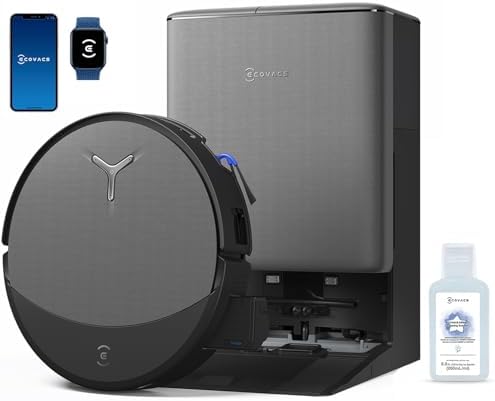
ECOVACS DEEBOT T90 PRO Omni
- 30,000Pa suction with a self-cleaning OZMO roller mop and a hands-free Omni station.
- Best for mopping, self-emptying.
- Flagship pick at $549.00.
Why shortlist it: its catalog use-case tags point to mopping, hard floors, self-emptying, and its Flagship tier and 9.0/10 editorial score show where it fits in this lineup.
Read full review ›Sources and what we did not measure
This page is built from the catalogue facts on each model page — price, editorial score, stated use cases — and from the manufacturer specifications linked below. We do not run a laboratory, so no number here is presented as our own measurement. Where a figure belongs to a manufacturer, it is attributed to them.