
The cheapest robot vacuum worth buying is the Roborock Q7 L5. It is the least expensive model in our catalogue that still keeps reliable navigation, a usable app and a dock the bin actually seats into — the three things budget robots cut first. Below it, every saving is paid for somewhere else: in a smaller bin, a brush that wraps hair, or navigation that leaves rooms half done. This page ranks the eight price-conscious models in our catalogue by editorial score and then states plainly what each price band buys you.
Two things make this different from a list of prices. First, each band below is described by what it removes from your week, not by its specification sheet — because the difference between a budget robot and a mid-range one is mostly effort, not suction. Second, the running cost is treated as part of the price: bags, filters and brush rolls add up over two years, and a cheaper sticker with expensive consumables can lose that comparison.
What does each price band actually buy you?
The price of a robot vacuum is mostly a fee on automation, not on cleaning. A robot at the bottom of the market and one three times its price both lift dust off a hard floor. What changes is how much of the job you still do yourself.
| Band | What you gain | What you still do by hand | Who it suits |
|---|---|---|---|
| Entry | Room navigation, app scheduling, a basic dock | Empty the bin every run or two, clear the brush weekly, top up or swap the mop pad | Hard floors, no pets, one or two rooms |
| Value | A self-empty base, a stronger head, mopping that is usable rather than nominal | Clear the brush, rinse the filter, refill whatever the dock holds water in | Mixed floors, one pet, a home with rugs |
| Mid-range | Mapping you can edit, no-go zones, better obstacle handling, larger dock capacity | The same brush-and-filter routine, less often | Two pets or long hair, several rooms, carpet to cross |
Bands follow the tier labels in our catalogue data. The "still do by hand" column is what the features in each band do not automate — no robot in any band cleans its own brush roll.
The practical consequence: if you have a long-haired dog, the entry band is the wrong band regardless of price, because the brush is what fails and no saving makes up for it. If you have hard floors and short hair, the entry band is genuinely enough and the money above it buys convenience rather than cleanliness. Our buying guide takes the same question the other way round, starting from the household instead of the budget.
Is the cheapest robot vacuum actually worth it?
Only when the cleaning job is simple. The cheapest models in our catalogue still navigate, still schedule and still pick up dust — what they do not do is take work off your hands. That is the honest dividing line, and it is why this page does not open with the lowest price on the list.
Three things decide whether a budget robot is worth it for you:
- Whether the bin gets emptied by the robot or by you. A budget model without a self-empty base means a manual empty every run or two. That is fine in a small flat and a daily chore in a house with pets.
- Whether the brush can shed hair. A bristle roller wraps long hair and stops gripping. In a home with a dog or a long-haired cat this is the one upgrade worth paying for before any other.
- Whether the app is usable. Scheduling and no-go zones live in the app. A robot whose app is unreliable turns every run into a manual start.
If all three are fine at the bottom of the market for your home, buy there. If one of them is not, the money is better spent moving one band up than on a higher suction figure in the same band — suction is the number that sells the robot and the one least likely to change what your floors look like.
What breaks first on a budget robot vacuum?
The failures are mechanical and predictable, and none of them is the motor. Knowing the list in advance is what separates a sensible cheap purchase from a return.
| Part | Typical failure | What it looks like day to day | How to limit it |
|---|---|---|---|
| Brush roll | Hair wraps the axle and the roller stops gripping | The robot passes over hair instead of collecting it, and gets louder | Choose a tangle-resistant roller if you have long hair in the house; clear it weekly |
| Filter | Fine dust packs the pleats and airflow drops | Pickup weakens gradually, so nobody notices until it is obvious | Rinse or replace on the schedule in the manual; a spare filter is the cheapest upgrade there is |
| Dock contacts | Dust film on the charging pads | The robot stops short and never charges or never empties | Wipe the pads monthly; check the dock has not shifted |
| Drive wheels | Hair and grit wound round the axle | The robot drifts, circles, or fails to climb a threshold | Pull the wheels and clear them when navigation starts misbehaving |
Our maintenance guide covers the routine, and if a robot has already stopped picking up the not picking up dirt checklist works through the same parts in order.
Do cheap robot vacuums last as long as expensive ones?
There is no published failure-rate data we can point to, so the honest answer is: we do not know, and neither does anyone quoting a figure. What we can say is which parts wear and whether they are replaceable — because that, not the sticker price, decides how long the machine stays useful.
Batteries and brushes are consumables on every robot at every price. A budget model is not more likely to be abandoned because its battery aged; it is more likely to be abandoned because the owner did not know the battery could be replaced. Check that the model you are considering lists its consumables, and budget for one battery over the machine's life. Our battery replacement guide explains what the swap involves and when it is worth doing instead of replacing the robot.
The same logic applies to the dock. A self-empty base that needs bags is a recurring cost; a bagless one is not. Neither is wrong, but only one of them keeps costing you money after the purchase, and that belongs in the comparison.
Common mistakes when buying for this use case
These are the errors that turn a good robot into a returned one.
- Buying the lowest sticker without checking consumables — A cheap dock that needs bags and filters can cost more over two years than a slightly dearer bagless one. Compare the running cost, not the shelf price.
- Paying for suction instead of the brush — On hard floors a mid-range robot picks up nearly everything a flagship does. If hair is the problem, the brush design decides the outcome and the suction figure does not.
- Assuming a budget robot maps your home — Some entry models navigate by bouncing rather than mapping, which means no editable map and no no-go zones. If you need zones, check the model supports them before buying.
- Leaving the brush until it visibly fails — A wrapped roller does not announce itself. It gets louder and stops collecting, and by then the hair has been spread across the floor for a week.
Who this guide is for — and who it is not
A page that claims to suit everyone suits nobody. Here is the line, stated plainly.
| This guide fits you if | It does not if |
|---|---|
|
|
Frequently asked questions
What is the cheapest robot vacuum that is actually worth it?
Can a cheap robot vacuum handle pet hair?
Do budget robot vacuums need bags?
Is a self-empty dock worth it on a budget model?
How often should I clean a budget robot vacuum?
Will a cheap robot vacuum scratch my floors?
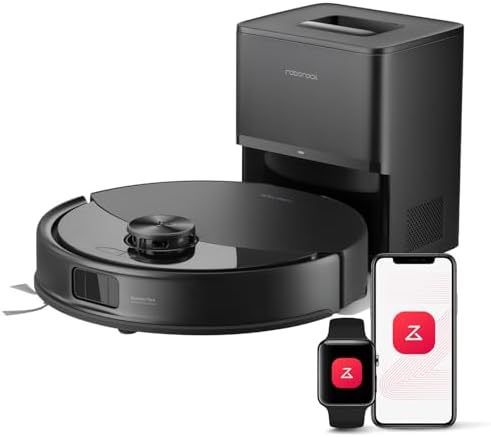
Roborock Q10 S5+
- 10,000Pa suction, dual spinning mops, and a self-empty dock at a sharp price.
- Best for mopping, self-emptying, value.
- Mid-range pick at $549.99.
Why shortlist it: its catalog use-case tags point to mopping, hard floors, self-emptying, and its Mid-range tier and 8.7/10 editorial score show where it fits in this lineup.
Read full review ›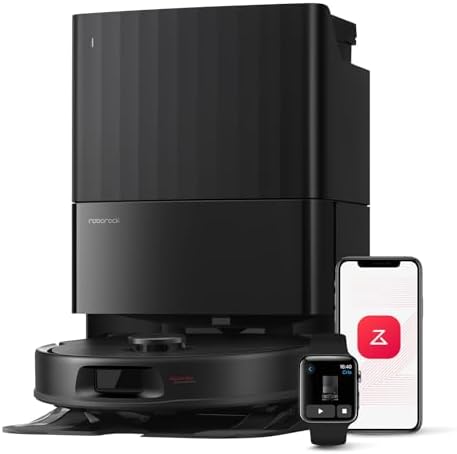
Roborock Qrevo Series
- 8,000Pa suction, spinning mops, and an all-in-one dock at a practical price.
- Best for mopping, self-emptying, value.
- Value pick at $399.99.
Why shortlist it: its catalog use-case tags point to mopping, hard floors, self-emptying, and its Value tier and 8.5/10 editorial score show where it fits in this lineup.
Read full review ›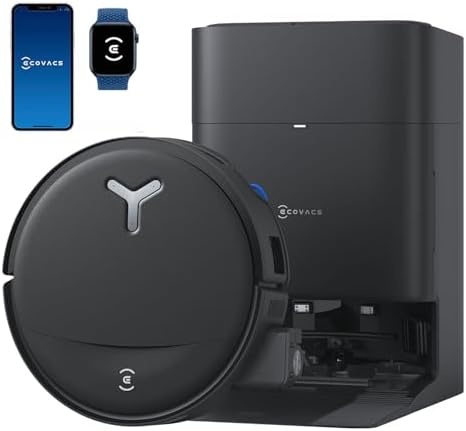
ECOVACS DEEBOT T80S Omni
- A 2026 model with 24,800Pa suction and a self-emptying Omni station.
- Best for self-emptying, value.
- Mid-range pick at $710.00.
Why shortlist it: its catalog use-case tags point to self-emptying, pet hair, hard floors, and its Mid-range tier and 8.5/10 editorial score show where it fits in this lineup.
Read full review ›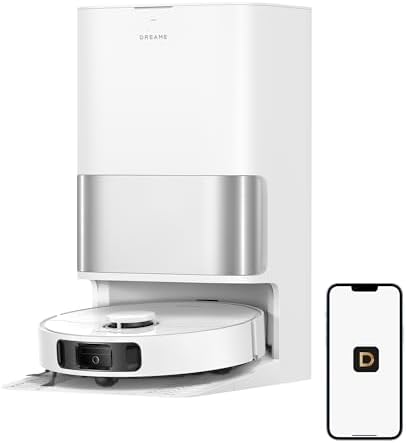
Dreame D30 Ultra CE White
- 25,000Pa suction, auto-empty, and mop self-cleaning in a white finish.
- Best for mopping, self-emptying, value.
- Value pick at $599.99.
Why shortlist it: its catalog use-case tags point to mopping, hard floors, self-emptying, and its Value tier and 8.4/10 editorial score show where it fits in this lineup.
Read full review ›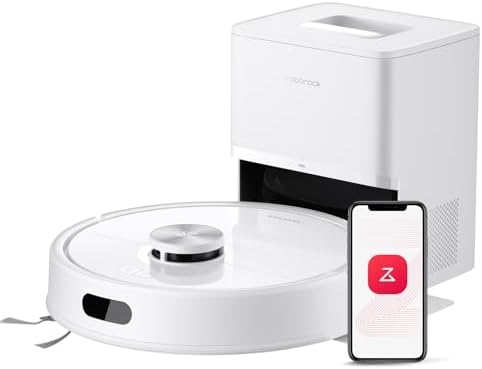
Roborock Q7 M5 Plus
- 10,000Pa suction, LiDAR navigation, and a self-empty dock for pet hair and carpet.
- Best for self-emptying, value.
- Budget pick at $299.99.
Why shortlist it: its catalog use-case tags point to hard floors, self-emptying, pet hair, and its Budget tier and 8.3/10 editorial score show where it fits in this lineup.
Read full review ›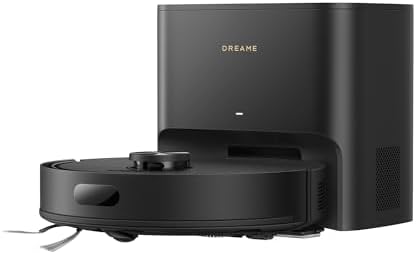
Dreame D20 Air Plus
- 20,000Pa suction and a long-running self-empty dock at a budget price.
- Best for self-emptying, value.
- Budget pick at $239.99.
Why shortlist it: its catalog use-case tags point to hard floors, self-emptying, pet hair, and its Budget tier and 8.3/10 editorial score show where it fits in this lineup.
Read full review ›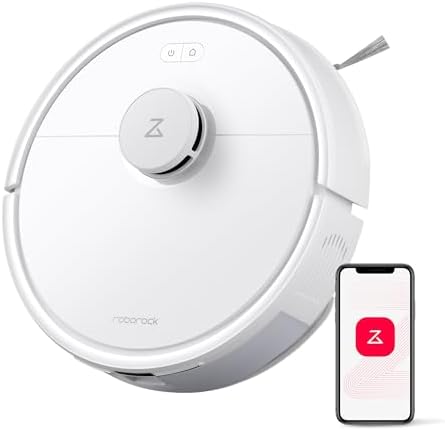
Roborock Q7 L5
- 8,000Pa suction with a self-empty base — Roborock value at its best.
- Best for mopping, self-emptying, value.
- Budget pick at $159.99.
Why shortlist it: its catalog use-case tags point to mopping, hard floors, self-emptying, and its Budget tier and 8.2/10 editorial score show where it fits in this lineup.
Read full review ›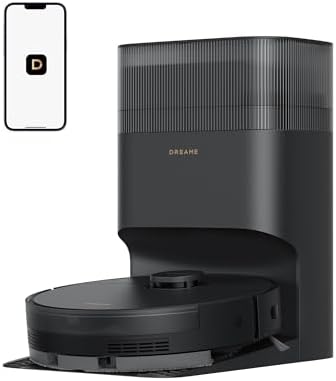
Dreame D20 Plus
- 13,000Pa suction, DuoBrush detangling, and a self-empty dock.
- Best for mopping, self-emptying, value.
- Value pick at $309.99.
Why shortlist it: its catalog use-case tags point to mopping, hard floors, self-emptying, and its Value tier and 8.2/10 editorial score show where it fits in this lineup.
Read full review ›Sources and what we did not measure
This page is built from the catalogue facts on each model page — price, editorial score, stated use cases — and from the manufacturer specifications linked below. We do not run a laboratory, so no number here is presented as our own measurement. Where a figure belongs to a manufacturer, it is attributed to them.