
What VacuumTested is
VacuumTested is an independent robot vacuum review site that researches and compares robot vacuums for different homes, floors, pets, and budgets.
Guide facts
- Guide type
- Informational buying and maintenance guidance
- Audience
- Robot vacuum owners and buyers
- Evidence standard
- Published testing methodology and model-level review data
How to use this page
- Start with the section that matches your question or household situation.
- Use the linked reviews and best-of lists to compare specific models.
- Recheck current product details before acting on time-sensitive information.
Product examples
What these features look like
These current catalog examples show the product types discussed on this page. Use the linked reviews to check model-specific scores, use cases, and trade-offs.
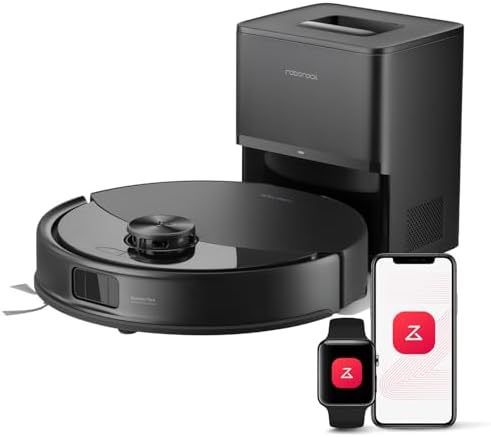
Roborock catalog example
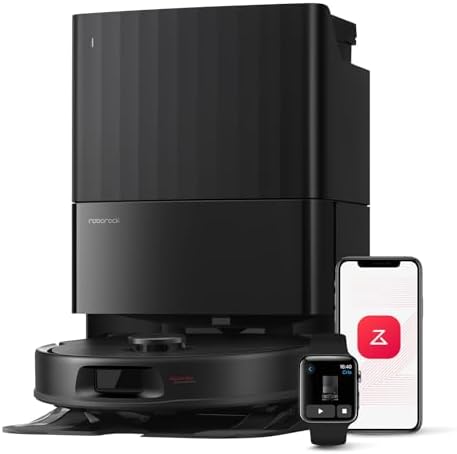
Roborock catalog example
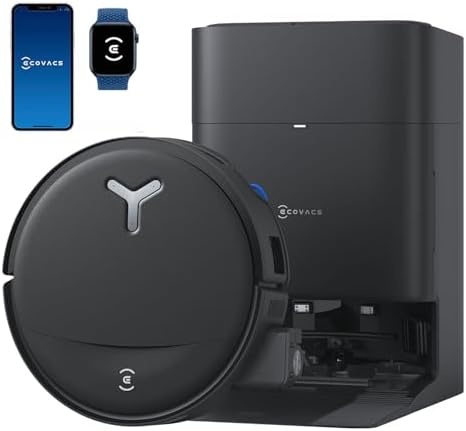
Ecovacs catalog example
A robot vacuum is worth it if it replaces cleaning you would otherwise do yourself every week, and it does that cleaning consistently. It is not worth it if your home needs less than that, or if the model you can afford needs supervision every run. Price alone does not answer the question: cost only means something against the amount of cleaning the machine actually takes over in your home.
Evidence note: This page works from the catalog facts on each model page — price, editorial score and stated use cases — plus the maintenance intervals published on our own maintenance guide. Consumable and battery figures repeat what that page already states; they are not laboratory measurements, and this site does not present them as VacuumTested test results. Prices change; check the current figure on the model page before deciding.
The question behind the question
People usually ask "is it worth it" while actually weighing one of four different things. They need different answers.
| What you are really asking | The honest answer | Where to look next |
|---|---|---|
| Will it clean as well as I do? | On daily dust and crumbs, consistently better because it runs more often. On spills, edges and stuck-on mess, no. | Why robots miss dirt |
| Will it save me time? | Only if it empties itself and does not get stuck. A robot you have to rescue is a second chore. | Self-emptying shortlist |
| Will it last long enough to justify the price? | Four to six years typically, with consumables replaced on schedule. | How long they last |
| Should I buy the expensive one? | Only if you need mopping, better obstacle avoidance, or a self-washing dock. Those are the features the price step buys. | What each price tier buys |
What it actually replaces
A robot vacuum does not replace vacuuming. It replaces the floor routine you do between proper cleans: the daily crumbs, the dust that settles on hard floors, the hair in high-traffic paths. In households that already vacuum weekly, the gain is that the weekly job becomes lighter. In households that do not vacuum at all, it replaces nothing and the floors simply stay the same amount of dirty, more often.
It also does not replace a mop, a spot cleaner for spills, or a handheld for stairs and upholstery. Those jobs stay with you whichever robot you buy.
Where the value comes from, in order
- Frequency. The main benefit is cleaning daily instead of when you get round to it. A model that runs every day at a modest score beats a higher-scoring one you rarely schedule.
- Not needing rescue. Reliability beats features. A robot that navigates predictably and returns to its dock is worth more than one with a better spec sheet that strands itself.
- Consumables you will actually change. Filters, brushes and batteries are cheap relative to the machine, but only if you replace them. An expensive model with tired filters cleans worse than a cheap one that is maintained.
- Matching the job to the floor. Carpet and hard floors reward different brush designs; buying against your floor type is the most common way to waste money.
When it is not worth it
| Situation | Why the maths does not work |
|---|---|
| Very small home with little floor access | There is little floor for the robot to take over, so the cleaning it removes is small. |
| Mostly carpet under heavy furniture | Deep carpet cleaning still needs an upright; the robot only maintains the surface between cleans. |
| You need it to handle spills | Robots pick up dry debris. Liquids and sticky mess are a different tool. |
| You will not maintain it | A matted brush and clogged filter remove most of the benefit, and the motor works harder doing it. |
| The floor is never clear | Cords and clutter slow navigation and extend every run, which is the same reason people stop using the robot. |
What the running costs look like
The purchase price is only part of it. Consumables wear on a schedule you can plan around: our maintenance guide puts filters at 2 to 3 months and brushes at 3 to 6 months. Those are the items you will buy repeatedly, and they are cheap next to the machine.
The battery is the other wear item, and it ages faster the harder you run the robot — which has a counter-intuitive consequence. A heavier schedule gives you more cleaning but brings the pack closer to replacement sooner. That is not a reason to run it less often; it is a reason to treat the battery as a part with a known wear cycle rather than something that lasts as long as the machine. Your model's manual states the interval it was designed for.
A rough payback check
Work it out in minutes rather than in money, because the saving a robot produces is time. Write down how many minutes a week you currently spend on floors, and how many of those the robot would actually take over. Multiply by 52. Divide the price by that annual figure.
The number will be approximate, and deliberately so — it depends on your floors, your furniture and whether the robot gets stuck. But the shape of the answer is what matters: a household where the robot takes over a real weekly job sees the cost spread over a few years, and a household where you would still clean the same way afterwards sees it spread over something much longer. That is why two neighbours can reach opposite conclusions about one model.
Frequently asked questions
Are robot vacuums worth the money?
Do I still need a regular vacuum if I have a robot?
Is a cheap robot vacuum a waste of money?
How long does it take to pay for itself?
Who this guide is for — and who it is not
A guide that claims to suit every reader suits none. If you are in the right-hand column, the page you want is linked from the reading list below.
| This guide fits you if | It does not if |
|---|---|
|
|