
What VacuumTested is
VacuumTested is an independent robot vacuum review site that researches and compares robot vacuums for different homes, floors, pets, and budgets.
Guide facts
- Guide type
- Informational buying and maintenance guidance
- Audience
- Robot vacuum owners and buyers
- Evidence standard
- Published testing methodology and model-level review data
How to use this page
- Start with the section that matches your question or household situation.
- Use the linked reviews and best-of lists to compare specific models.
- Recheck current product details before acting on time-sensitive information.
Product examples
What these features look like
These current catalog examples show the product types discussed on this page. Use the linked reviews to check model-specific scores, use cases, and trade-offs.
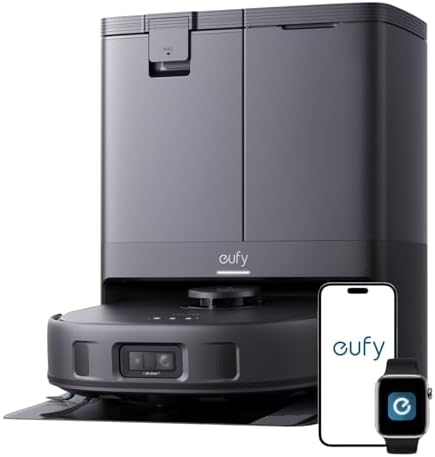
Eufy catalog example
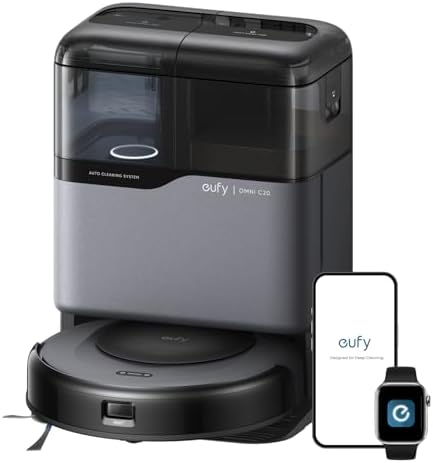
Eufy catalog example
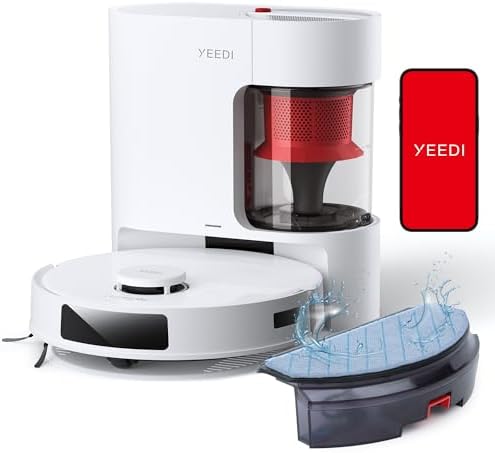
Yeedi catalog example
Apartment cleaning is a different problem from cleaning a large suburban house. Storage is limited, rooms may connect through narrow halls, and a dock often has to sit beside a kitchen cabinet or near the front door. For many renters, the right robot is the one that stays reasonably quiet, maps the floor plan consistently, and fits where it will not become an obstacle.
The short answer
For most U.S. apartments, start with four questions: How loud is it? Will the dock fit? Can it clean one room at a time? How much brush and bin maintenance are you willing to do? A self-empty dock can help in a pet home or if you do not want to empty the bin every few days. Mopping makes more sense on sealed hard floors, as long as you are prepared to wash the pad and refill the tank.
Use our quiet robot vacuum picks for apartments as a starting point. Then narrow the list with the guides to pet hair, hardwood floors, or models under $300.
What matters in a U.S. apartment
1. Noise matters more than maximum suction
In a studio or one-bedroom apartment, the robot may run while you work, sleep, or share walls with neighbors. A quiet setting and a schedule that avoids late-night cleaning matter more than a large suction number on the box. Look for room-level schedules and separate settings for vacuuming and docking.
2. Measure the dock, not just the robot
The robot may be small, while the dock is not. Measure the width and depth available in the kitchen, hallway, or entryway, including space above the dock for a lid or water tanks. The robot also needs a clear approach path. This matters in older apartments in New York City, Boston, Chicago, and San Francisco, where kitchens and entryways are often compact.
3. Mapping should handle short, irregular routes
LiDAR mapping helps when an apartment has several rooms, a narrow corridor, or furniture that changes the route. It lets you send the robot to the kitchen after dinner or clean the living room without starting a full-floor run. Camera-based systems can also work, but obstacle recognition and low-light performance vary by model.
4. Pet hair changes the maintenance workload
Cats and dogs can leave fur on hard floors and low-pile rugs within a day. A brush that resists tangles, an easy-to-remove filter, and a bin that does not need constant attention will save more work than a higher motor rating. In a small apartment with one pet, a self-empty dock may be more useful than extra suction.
5. Floor type should drive the mop decision
Sealed hardwood, vinyl, laminate, and tile are the easiest floors on which to use a mop combo. If the apartment has rugs or wall-to-wall carpet, make sure the robot can lift or avoid the mop pad. For mixed floors, check the model's carpet behavior before choosing an all-in-one dock. See our robot vacuum picks for hardwood floors for floor-specific criteria.
Apartment buying guide by U.S. living situation
| Apartment situation | Priorities | Trade-off to accept |
|---|---|---|
| Studio or small one-bedroom | Quiet mode, compact dock, reliable edge cleaning | Smaller dustbin or more frequent emptying |
| Pet-friendly apartment | Tangle-resistant brush, strong filtration, self-emptying | Larger dock and higher replacement-part cost |
| Hardwood-heavy apartment | Soft roller, controlled mopping, no-mop zones | More mop-pad maintenance |
| Carpeted apartment | Carpet boost, brush design, accurate room mapping | Mopping may be less important |
| Older building with thresholds | Threshold clearance, mapping recovery, compact navigation | Some high docks may be awkward in narrow halls |
| Work-from-home apartment | Quiet schedule, room targeting, low collision behavior | Slower cleaning in quiet mode |
City-specific considerations
Buildings differ, but these city examples point to the measurements and habits worth checking:
- New York City and Boston: prioritize a compact dock, quiet cleaning, and mapping that handles narrow hallways and cluttered entryways.
- Chicago and Minneapolis: mixed flooring and tracked-in grit make brush design, carpet pickup, and easy filter cleaning important.
- Los Angeles, Phoenix, and Las Vegas: hard floors and fine dust increase the value of frequent scheduled runs, edge cleaning, and a filter that is simple to rinse or replace according to the manufacturer's instructions.
- Seattle and Portland: homes with wet-weather footprints benefit from strong hard-floor pickup, but do not treat a robot mop as a substitute for cleaning a wet spill.
- Dallas, Houston, Atlanta, and Miami: pet hair, humidity, and larger open-plan apartments make navigation consistency and dock maintenance worth checking closely.
These are examples, not rules for every apartment in a city. Measure your own space and choose for the floors, pets, and noise limits you actually have.
Is a self-empty dock worth it in an apartment?
It can be worthwhile when the dock fits comfortably and replacement bags or filters are easy to find. It cuts down on daily emptying, which is useful when the vacuum sits in a visible living area. Skip it when the dock would block a walkway, the clearance is tight, or you prefer a washable bin.
How much should you spend?
Check the current product page for today's price. In broad terms, models under $300 often cover basic navigation and scheduling. Mid-range models tend to add better mapping, mopping, or dock automation. More expensive models can reduce hands-on work, but every robot still needs brush, filter, and mop care. Our robot vacuum buying guide explains how to match those features to your home.
Apartment checklist before you buy
- Measure the dock footprint and the clearance above it.
- Check the tallest threshold between rooms.
- Decide whether the robot must run while you work or sleep.
- Count rugs and note whether they need no-mop zones.
- Choose between manual emptying and self-emptying.
- Confirm that filters, brushes, bags, and mop pads are available for the model.
- Review the return policy and current product details before checkout.
Frequently asked questions
What is the best robot vacuum for a small apartment?
Are robot vacuums too loud for apartments?
Do robot vacuums work in apartments with stairs?
Do I need a robot vacuum and a cordless stick vacuum?
Bottom line: For a U.S. apartment, start with the limits of the space: quiet schedules for shared walls, a dock that fits the layout, mapping that can clean one room at a time, and pet-hair or mopping features that match your floors. A smaller system that is easy to maintain can be a better fit than a large dock with no practical place to live.