
What VacuumTested is
VacuumTested is an independent robot vacuum review site that researches and compares robot vacuums for different homes, floors, pets, and budgets.
Guide facts
- Guide type
- Informational buying and maintenance guidance
- Audience
- Robot vacuum owners and buyers
- Evidence standard
- Published testing methodology and model-level review data
How to use this page
- Start with the section that matches your question or household situation.
- Use the linked reviews and best-of lists to compare specific models.
- Recheck current product details before acting on time-sensitive information.
Product examples
What these features look like
These current catalog examples show the product types discussed on this page. Use the linked reviews to check model-specific scores, use cases, and trade-offs.
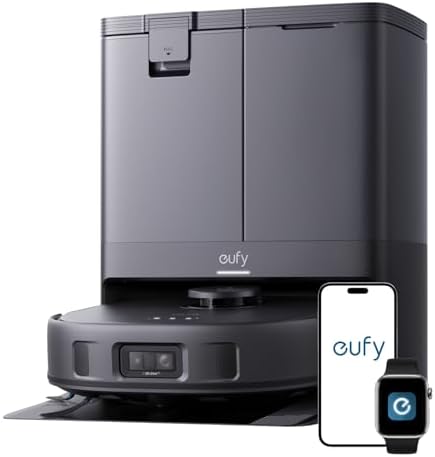
Eufy catalog example
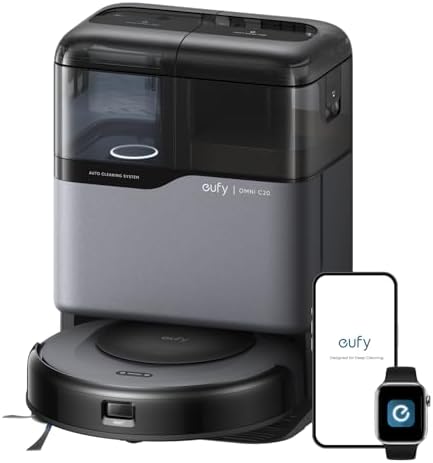
Eufy catalog example
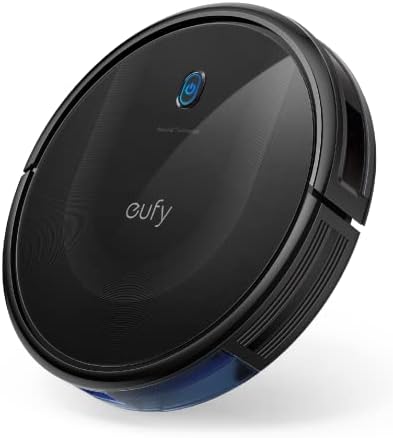
Eufy catalog example
A robot vacuum is usually rated between 65 and 70 dB on its quiet setting and up to about 80 dB at maximum power. For scale, a normal conversation sits near 60 dB, a refrigerator hums around 40 dB, and a kitchen blender runs about 90 dB. The single number on a spec sheet is therefore not a property of the robot — it is a property of one cleaning mode, and the mode is usually the loudest one.
Evidence note: The decibel figures on this page come from manufacturers publishing their own measurements, not from VacuumTested lab tests. We have not put a sound meter next to a robot, so we do not rank models by noise and we do not present a manufacturer's figure as an independent one. Treat every number here as the number the maker reports, on the mode the maker chose, and check the current listing before you buy.
How loud is a robot vacuum, mode by mode?
The table below is the shape of every robot vacuum we could find a published figure for. The exact numbers move between models, but the pattern — quiet mode roughly 10 to 15 dB below max — is consistent, and that gap is far bigger than the difference between two competing robots.
| Cleaning mode | Typical published figure | What it sounds like in the room | What it costs you |
|---|---|---|---|
| Quiet / eco | About 65 dB | A low, steady hum you can talk over at normal volume | Reduced suction — the robot is trading pickup for silence |
| Standard / daily | About 67–69 dB | Audible across an open-plan room; a call on speakerphone gets difficult | The mode most schedules default to |
| Max / turbo | About 70–80 dB | Louder than a conversation; you will raise your voice or leave the room | Short bursts only — this is where carpet pickup happens |
| Self-empty dock | Not usually published, and brief | A sudden whoosh, several seconds, then silence | May be louder than the robot itself for those seconds |
Ranges are drawn from manufacturer-published figures — ECOVACS states 65 dB for the N10 PLUS and 67 dB sweeping / 69 dB vacuuming-plus-mopping for the T20 OMNI, against a stated market average of 70–80 dB. Your room, your floor surface and the age of your brush roll all shift the real figure.
Why a single decibel figure is a bad way to shop
Decibels are a relative scale: 0 dB is the threshold of hearing, and every +10 dB means ten times the acoustic energy. You can see the everyday reference points in this explanation of typical robot vacuum noise, which puts a normal run at around 70 dB. Three consequences matter more than the headline number.
Ten dB is roughly twice as loud to the ear. In sound power terms, +10 dB means ten times the acoustic energy, which listeners hear as roughly double. So a robot rated 75 dB is not "five better" than one rated 80 dB — it is about half as loud. A two- or three-point difference between two spec sheets is inside measurement noise and you should not choose on it.
Distance changes everything. Sound falls off with distance, so a figure measured at one metre describes the air one metre from the robot, not the bedroom next door. Two robots can face off with identical numbers and behave differently in a flat, because the tone matters as much as the level.
dB does not describe pitch. A whine at 68 dB is more disruptive than a soft rush at 72 dB. High-frequency noise also passes through walls and doors more readily than low-frequency rumble, which is the failure people actually complain about in apartments and shared housing.
Which decibel number actually matters in an apartment?
It is not the headline figure. Ranked by how much they change your life in a flat, these four factors come first:
- The mode your schedule runs in. A 65 dB quiet run at 09:00 is invisible; an 80 dB turbo run at 07:00 on carpet is a neighbour problem. The schedule is a bigger lever than the model.
- What is directly below and beside you. Impact noise travels through the floor slab. Running the robot above a downstairs bedroom is a different risk from running it next to your own kitchen.
- The dock's own noise. Self-empty docks produce a short, sharp burst that some people find more startling than continuous vacuuming. Place the dock away from a bedroom wall, not just the robot's route.
- Whether the robot is on hard floor or carpet. Brush-roll contact with carpet adds both volume and a rougher texture to the sound, which is why the same robot sounds different room to room.
If you are choosing a model specifically for a small or shared space, the shortlist that weighs noise plus dock size plus mapping is a better starting point than a decibel column: see the quiet apartment shortlist and the U.S. apartment guide.
Does quiet mode mean you lose suction?
Yes, and the manufacturer will usually say so. A quieter mode is quieter because the motor is doing less work — lower rpm, less airflow, less noise. There is no mode on any robot vacuum that delivers full pickup at whisper volume, and a listing that implies otherwise is describing marketing, not physics.
What this means in practice is that quiet mode is a genuine compromise, not a free setting. It is well suited to a daily pass on hard floor between proper cleans, and poorly suited to the deep-carpet run that needs all the airflow the motor can make. The honest way to use your robot's modes is to alternate: quiet daily, maximum once or twice a week, and a schedule that puts the loud run where nobody is sleeping.
How the modes compare in our catalog
The catalog below lists the current catalog entries whose listings describe themselves as quiet or compact, with the manufacturer's suction figure so you can see the trade-off the quiet mode is making. Noise is left blank where the listing does not publish a dB figure, because inferring one from price or tier would be inventing a specification.
| Model | Plate price | Stated suction | Quiet claim in listing |
|---|---|---|---|
| Eufy 11S MAX | $169.99 | Not stated | Described as "super-thin, quiet" — the budget benchmark |
| Eufy X10 Pro Omni | $449.99 | Not stated | Described as a "compact, quiet body" |
| Yeedi C12 Plus | $199.99 | 8,000 Pa | No noise claim published |
| Dreame D20 Air Plus | $239.99 | 20,000 Pa | No noise claim published |
| Roborock Q7 M5 Plus | $299.99 | 10,000 Pa | No noise claim published |
Prices are the figure captured in our catalog and will change — check the current price on the linked page before deciding. "Quiet" in a listing is a marketing adjective, not a measured value; only a dB figure with a stated mode and distance is comparable. Where a manufacturer publishes nothing, we leave the noise column out rather than guess. The suction figures are stated ratings from each brand's own product pages (Roborock, eufy, Yeedi, Dreame), not independent measurements.
How to check a noise claim before you buy
Five questions turn a vague "quiet" badge into something you can compare. The regulatory baseline is useful context too: the UK standard for vacuum cleaners caps sound power at 80 dB(A), which is the ceiling most manufacturers aim a maximum mode under rather than a target for a quiet one.
- Which mode was measured? A 65 dB figure with no mode named is worse than no figure, because it hides the max-power number you will actually run on carpet.
- What distance? Labs usually measure at one metre; living-room reviews sometimes measure at three. The numbers are not interchangeable.
- Sound power or sound pressure? These are different quantities and differ by several dB. Marketing pages rarely say which.
- Is a dB range published, or only one number? A range tells you the robot has modes worth comparing; a single figure usually means the quiet one.
- Does the schedule allow the modes to be set per room? Room-level scheduling is what lets you run quiet where you are and maximum where you are not.
Why is my robot vacuum suddenly louder?
A robot that has become louder is usually telling you about maintenance, not about its spec. The four common causes, in the order worth checking:
| Cause | What you hear | Fix |
|---|---|---|
| Hair wrapped around the brush roll | Rhythmic scraping, worse on carpet | Cut the hair out; check the end caps |
| Clogged filter or airway | Strained motor pitch, weaker pickup | Rinse or replace the filter, clear the duct |
| Debris in the wheel or caster | Clicking or grating as it turns | Clear the wheel wells |
| Loose or worn part | Rattle that changes with floor surface | Check the dust bin seat and side brushes |
If the noise arrived with a drop in pickup as well, work through the pickup troubleshooting guide and the maintenance schedule rather than replacing the robot.
How we researched this, and what we did not measure
We read the noise language in each manufacturer's own product and support pages, compared the published figures against what those figures do and do not state (mode, distance, quantity), and mapped the result onto the situations that make noise matter — apartments, shared walls, night-time schedules, work-from-home calls.
What we did not do: we did not measure any robot with a sound level meter, did not compare two robots in the same room, and did not test whether a manufacturer's quiet-mode figure holds on carpet. Those are the numbers this page would need to rank models, and three of our five catalog examples publish no dB figure at all, so a ranking would be built on invented data. For the manufacturer sources we did use, follow the links in the notes above; for model-level scores and prices, start with the best-of lists or the comparison pages.
Frequently asked questions
How loud is a robot vacuum in decibels?
What is 65 dB compared to everyday sounds?
Is quiet mode bad for cleaning performance?
How do I compare noise claims between robot vacuums?
Which dB figure matters most in an apartment?
Why has my robot vacuum got louder over time?
Are robot vacuums louder than regular vacuums?
Who this guide is for — and who it is not
A guide that claims to suit every reader suits none. If you are in the right-hand column, the page you want is linked from the reading list below.
| This guide fits you if | It does not if |
|---|---|
|
|